See the product
A 30-minute slot on the live stand, on your own: the operator interface plus a camera on the physical wall.
Craft Wall turns a standard Linux server with an NVIDIA GPU into a video wall controller. Explore its functions, real stand recordings and the checks needed for your configuration.
Perpetual licence: €2,500 per server. Capacity depends on the GPU, video outputs and source workload.
Updated:
Cameras, web dashboards, RDP/VNC, NDI, HDMI/SDI capture, conferences, documents and video share the wall. Work with your sources in the browser console.
Connect RTSP/RTMP/HLS/SRT cameras, NDI, HDMI/SDI capture, web pages, RDP/VNC, SIP/H.323 conferences, documents, video files and OSD. Check actual formats and access permissions before sizing the server.
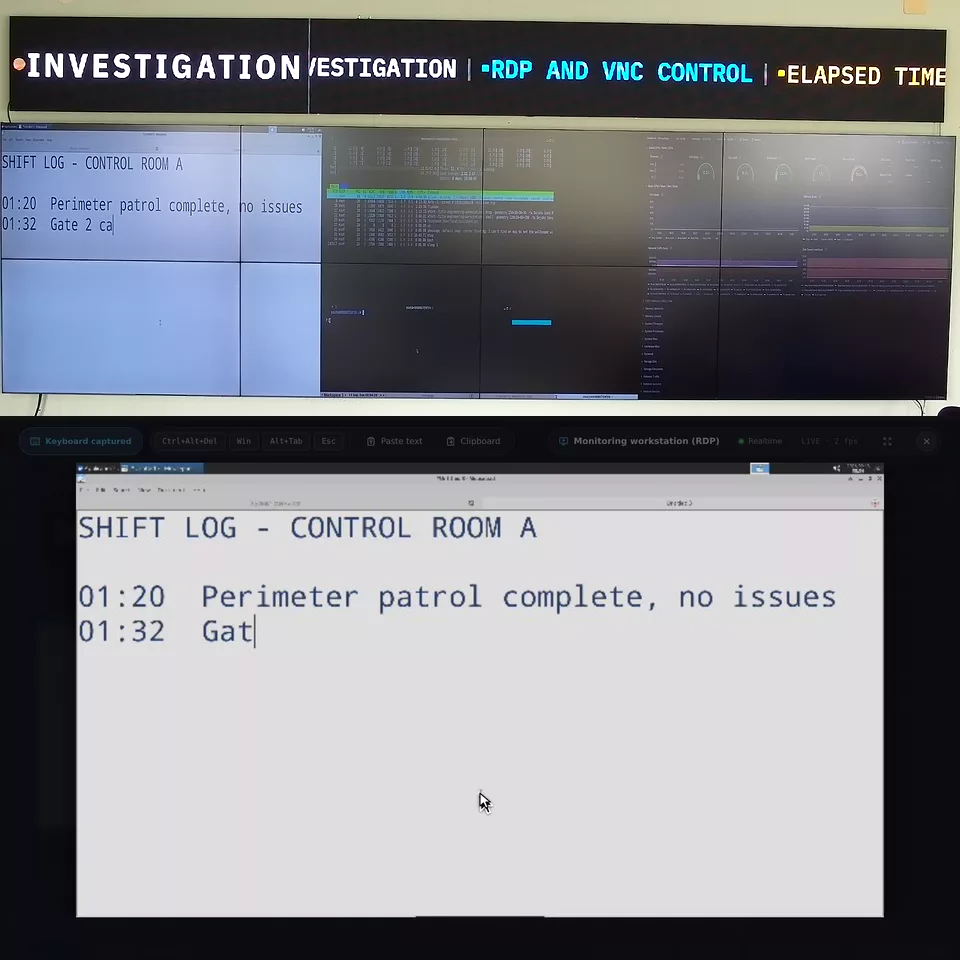
Open the browser console to add sources and switch layouts. Multiple operators work with the same wall without installing a desktop client.
Multiple operators can use the browser console. During the demonstration, review your laptop or tablet workflow and agree which users should access each source and scene.
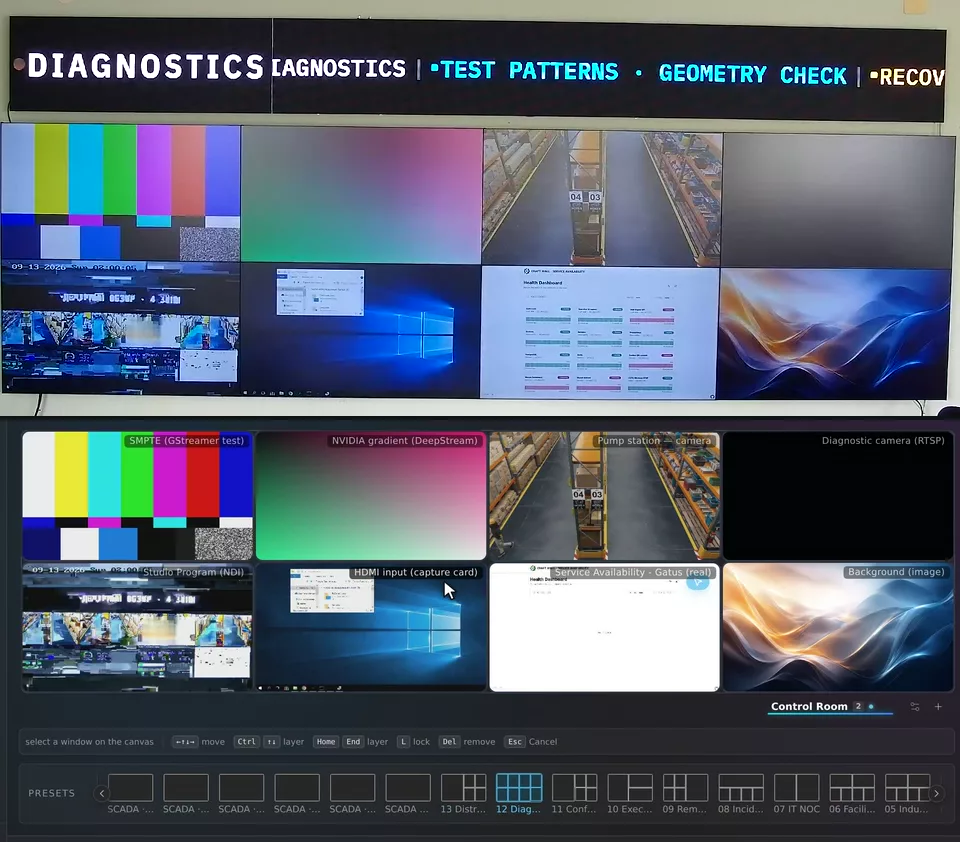
Move and resize windows in the editor. The physical wall applies the new geometry when you release the mouse.
The editor sets window geometry on the canvas. A dragged position is applied to the wall when the mouse is released; check dashboard legibility from the operator's working position.
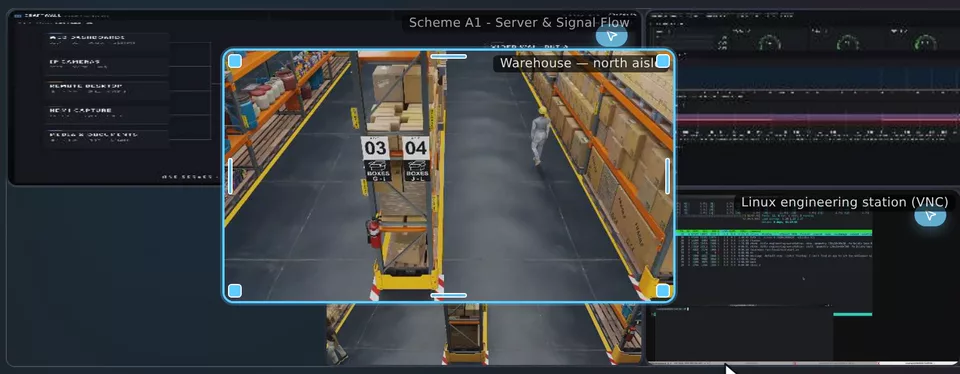
Prepare layouts for monitoring, incidents or meetings. Save them as scenes and select the one your operators need.
A scene saves a prepared layout for a task. Prepare separate scenes for routine monitoring, shift handover and incident review, then check them against the sources your team uses.
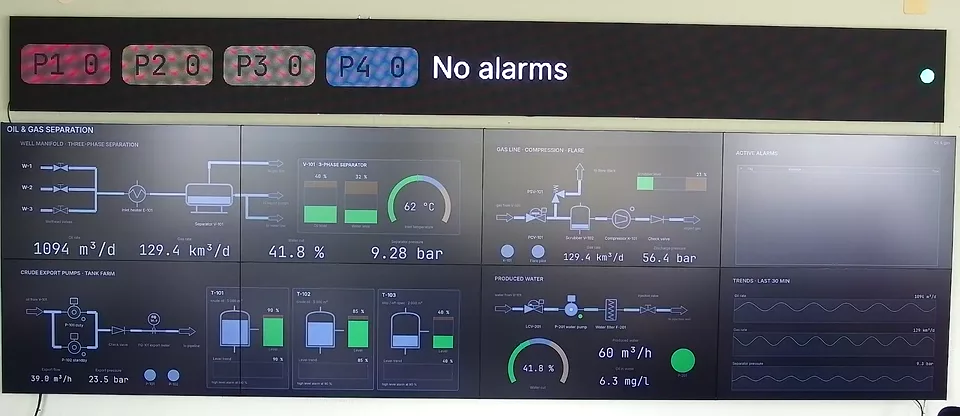
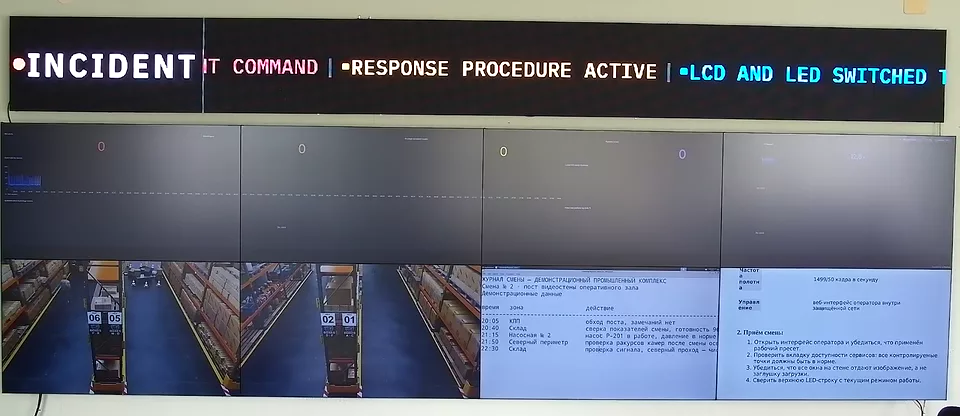
Use schedules for routine layout changes and alarm scenarios for incidents. The recording shows the switch to the alarm scene.
Use schedules and alarm scenarios to change the information displayed. Agree the event trigger, target scene, acknowledgement process and recovery checks with an engineer.
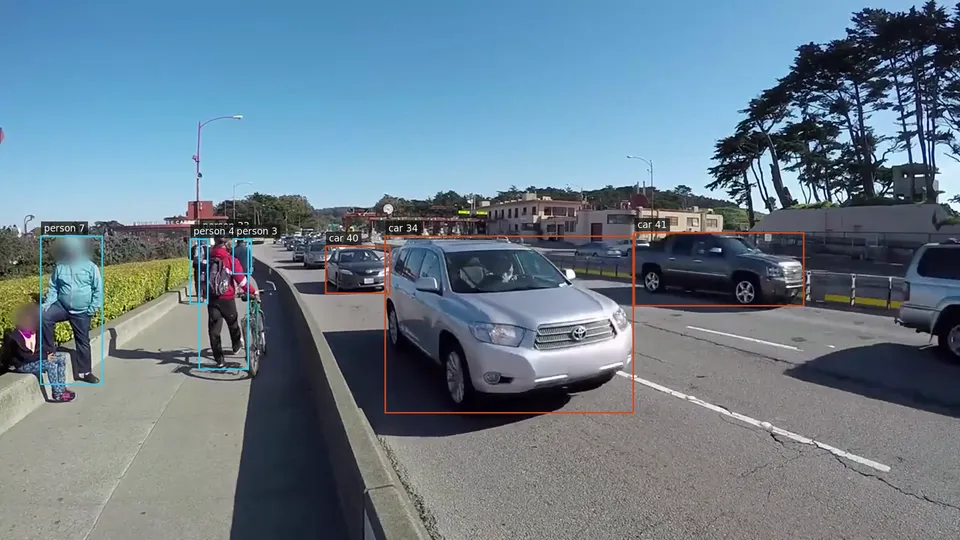
Display video analytics alongside cameras and dashboards. Processing runs on the server GPU.
Analytics uses the server's GPU resources. Sizing depends on camera resolution, frame rate and the selected analytics workload, as well as source count.
RTSP, RTMP, HLS, SRT, NDI and HDMI/SDI capture; web pages, documents, video and RDP/VNC.
SSO, MFA, RBAC and LDAP for operator access and permissions.
Plan a standby server for deployments that require redundancy.
SIP/H.323 conferencing sources, OSD labels and scrolling tickers.
Actual capacity depends on the server hardware. Display count and resolution depend on its GPU and video outputs.
Choose the configuration for the source formats, display resolution and redundancy your project needs.
Read the datasheet or the TCO methodology before arranging a demonstration.
A 30-minute slot on the live stand, on your own: the operator interface plus a camera on the physical wall.
Share the display layout, sources and requirements. We will discuss the configuration and prepare a quote.
For integrators and resellers evaluating software for customer projects.