In short
A video wall project in the UAE starts with the room, the operator's task and the sources that must appear together. This guide helps a customer and an AV integrator prepare a software-based controller specification and a comparable project quote.
For Craft Wall, the commercial entity is PIXEL COMMAND SOLUTIONS - FZCO, IFZA, Dubai Silicon Oasis, UAE. Company registration is 83495 and commercial licence is 90264. The contact and imprint pages provide the published company particulars.
Describe the room before choosing the wall
Identify whether the project serves a command centre, transport operation, NOC/SOC or corporate meeting room. Describe routine monitoring, incident coordination and briefing separately. Each task should have an owner and a representative set of displayed information.
A NOC, or network operations centre, may prioritise dense monitoring dashboards and remote desktops. An airport operations room may combine camera feeds with operational summaries. A boardroom may need conference sources and documents arranged for a shared discussion.
Use the same questions in Dubai, Abu Dhabi or another project location: who watches, who controls, which sources appear simultaneously and where the viewers sit. These answers provide a stronger specification than display count alone.
Create a source register for the integrator
List the format, connection method, resolution, frame rate and access owner for each source. Separate network video, web dashboards, remote desktops, conferences and captured HDMI or SDI outputs. Identify the physical connections and accounts the customer must provide.
Check source access on the intended network. A web dashboard can depend on authentication or another service even when the controller runs locally. Ask the relevant IT team to confirm those dependencies before treating the source as ready for acceptance.
Mark the simultaneous workload for each operating mode. A register may contain many cameras while a particular scene shows only a selection. The hardware review needs both the overall source inventory and the actual workload rendered at once.
Size software and hardware as separate decisions
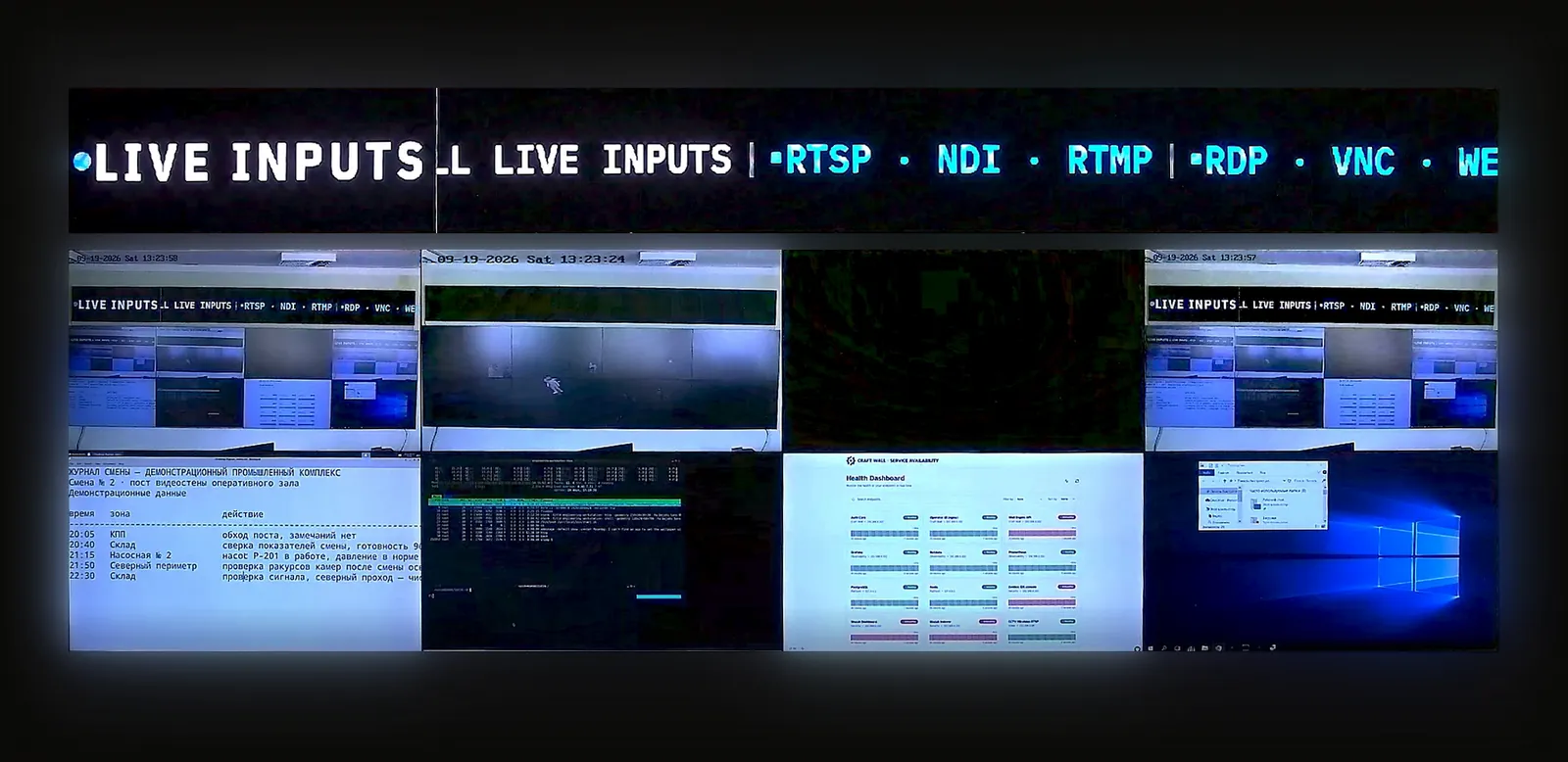
Craft Wall turns a standard Linux server with an NVIDIA GPU into a video wall controller. Operators manage sources and scenes from a browser on a laptop or tablet. The software supports multiple operators and prepared scenes for different tasks.
There are no licence caps on displays, sources, operators or canvases. Practical capacity depends on the GPU, physical video outputs and source workload. Include capture cards and any display-side equipment in the bill of materials where the configuration requires them.
Review display resolution and text legibility together. Test real dashboard labels, maps and video from the agreed seating positions. Record how panel boundaries and source window sizes affect the information operators must read during normal work.
Compare a published price with a complete project quote
The pricing page gives the published perpetual software licence and preconfigured-server starting price in euros. Ask the supplier to state the invoice currency and any conversion terms in the project offer. This guide does not estimate a dirham exchange rate.
Separate software, server hardware, displays, mounting, capture, commissioning and support when comparing offers. Confirm which party handles site preparation and operator handover. A controller licence price is one line in the project, not a complete room budget.
Use the five-year TCO calculator to review your assumptions about hardware, support and replacement. Treat competitor entries as comparison scenarios and follow their listed sources. Request a current project quote before using a scenario as a purchasing commitment.
Agree deployment, acceptance and handover
For an on-premises or isolated installation, review network boundaries, source dependencies and update delivery. Craft Wall supports SSO, MFA, RBAC and LDAP; agree the precise identity integration and permissions with an engineer and the customer's IT team.
Prepare acceptance checks for source access, scene changes, operator permissions and the required recovery scenarios. Test on the agreed configuration with representative sources. Record the outcome and the remaining issues before the customer accepts the installation.
Start the technical discussion with a 30-minute demonstration using your sources. Bring the display arrangement, source register and operating scenarios. The engineer can help identify compatibility and sizing questions before the integrator completes the specification.