Коротко
Последнее десятилетие AV-over-IP жил фрагментировано — три открытых стандарта и один проприетарный кластер делили рынок. ISE 2026 стал точкой перелома: AIMS Alliance объявил о первых 48 продуктах, сертифицированных по IPMX, и тем самым сделал IPMX сертифицируемым мультивендорным стандартом, а AVIXA теперь рекомендует прописывать сертификацию IPMX в тендерах 2026 года. В этой статье — что реально передают IPMX, SMPTE ST 2110 и SDVoE, где побеждает каждый, и как распознать тендерную лексику, которая закрепляет выбор за одним из них.
Точка перелома 2026 года
AV-over-IP начинался как клин между двумя мирами. Телецентры использовали SMPTE ST 2110 — стандарт SMPTE для передачи несжатого видео (а по ST 2110-22 — и сжатого), аудио и сопутствующих данных по IP с синхронизацией через PTP. Корпоративный ProAV держался на SDVoE (Software Defined Video over Ethernet) — стандарте от SDVoE Alliance, построенном на чипсете Semtech BlueRiver, который обычно работает в паре с PHY-микросхемой 10GBASE-T Marvell AQrate (бывшая Aquantia). Зазор между ними — диспетчерские, центры NOC и SOC, корпоративный AV, образование, ситуационные центры — закрывался NDI или проприетарным KVM-over-IP. Ни первое, ни второе не является открытым стандартом с мультивендорной сертификацией.
IPMX (Internet Protocol Media Experience) прицельно закрывает именно этот зазор. Он построен на семействе SMPTE ST 2110 — те же форматы пакетов, та же плоскость управления NMOS — но с такими изменениями, чтобы работать на той кабельной инфраструктуре, которая в ProAV уже есть: 1 GbE, опциональный PTP, нативный HDCP. AIMS сертифицировал первые 48 продуктов IPMX на тестовом мероприятии в Женеве и объявил о них на ISE 2026; среди производителей — Cobalt Digital, Matrox и Evertz.
Пока ни один опубликованный прогноз не оценивает, какая доля закупок диспетчерских и ситуационных центров будет требовать в технической спецификации IPMX плюс NMOS; мы рекомендуем считать эту связку вариантом по умолчанию для новых объектов. Заложить «неправильный» стандарт сейчас означает либо переделку инсталляции в 2028, либо жизнь со стеком, привязанным к вендору, от чего заказчик как раз и пытался уйти.
Что в действительности передаёт каждый стандарт
SMPTE ST 2110 — телевизионный стандарт
ST 2110 — не один протокол, а набор стандартов: ST 2110-10 для системной синхронизации, -20 для несжатого видео, -21 для формирования трафика и тайминга доставки, -22 для сжатого видео, -30 для аудио, -40 для служебных данных. Каждый разделяет медиа-поток на отдельные IP-потоки, привязанные к общему PTP-clock (IEEE 1588). Смысл разделения — телецентр получает возможность маршрутизировать аудио одним путём, видео другим и собирать обратно без повторного кодирования.
Видео в ST 2110-20 передаётся без сжатия — это одновременно главное достоинство стандарта и его главная стоимость. Один поток 4K60 занимает около 12 Гбит/с пропускной способности. Это требует 10 или 25 Gigabit Ethernet «из конца в конец», плюс коммутаторов со строгим QoS, граничными PTP-часами и достаточной плотностью портов. Совокупная стоимость инфраструктуры быстро растёт по мере увеличения числа источников.
В телевещании внедрение продолжает расти. Для отчёта Haivision Broadcast Transformation 2025 опросили почти 900 специалистов отрасли из 110 стран, а в выпуске 2026 года (более 1 300 респондентов) ST 2110 используют 30% опрошенных против 26% в 2025 году, при этом 82% по-прежнему опираются на инфраструктуру SDI.
Greenfield-телецентры по умолчанию строятся на ST 2110; замена legacy SDI-роутеров на ST 2110 — это стандартный путь обновления.
SDVoE — видео без сжатия или визуально без потерь и sub-frame-задержка
SDVoE — это чипсет-определяемая альтернатива. Каждое сертифицированное устройство (энкодер, декодер, трансивер) использует один и тот же чипсет Semtech BlueRiver, обычно в паре с PHY-микросхемой 10GBASE-T Marvell AQrate. Транспорт — 10 GbE: HD и 4K30 передаются полностью без сжатия, для 4K60 4:4:4 применяется фиксированное сжатие 1,4:1 визуально без потерь, а end-to-end-задержка остаётся меньше одного видеокадра.
USB, последовательный интерфейс и аудио идут рядом с видео по тому же каналу — это превращает SDVoE в фабрику KVM-класса там, где он развёрнут.
Фабрика устроена проще ST 2110 по замыслу. PTP не требуется — конечные точки синхронизируются через сам чипсет. Плоскость управления — проприетарная, относится к SDVoE Alliance; некоторые вендоры накладывают NMOS поверх, но NMOS не является каноническим путём управления. Это делает SDVoE быстрее в развёртывании, чем ST 2110, и тяжелее в совместном использовании с не-SDVoE-оборудованием.
Стоимостной профиль тоже проще и круче. Коммутаторы — 10 GbE на всём пути; SDVoE-устройства стоят существенно дороже, чем NDI-эквиваленты или AV-устройства на H.264, потому что в цену заложен лицензионный платёж за чипсет. Для сценариев, где end-to-end-задержка ниже одного кадра — это жёсткое требование (биржевые торговые залы, некоторые системы военного управления, часть live-производств), эта цена — входной билет. За пределами этих сценариев премия редко окупает себя.
IPMX — ST 2110, адаптированный под ProAV
IPMX сохраняет структуру пакетов ST 2110 и плоскость управления NMOS, но меняет три ключевые вещи, важные для ProAV-развёртываний:
- Сжатие JPEG XS. Визуально без потерь, низкая задержка (end-to-end в пределах одного кадра), эффективность по полосе примерно в 10 раз выше несжатого ST 2110. Поток 4K60 падает с ~12 Гбит/с до примерно 1 Гбит/с — это уже укладывается в стандартные коммутаторы 1 GbE.
- PTP становится опциональным. IPMX-устройства могут работать без общеплощадочного PTP-grandmaster, что снимает самый дорогой элемент инфраструктуры ST 2110. PTP при необходимости остаётся доступным — например, когда требуется синхронизированное воспроизведение по всей видеостене.
- Нативный HDCP. Коммерческие HDMI-источники (приставки, Blu-ray-плееры, выходы консолей, защищённое production-оборудование) проходят по фабрике без мостов. В ST 2110 нативного пути HDCP нет; в SDVoE HDCP обслуживается через чипсет; в IPMX он встроен в сам стандарт.
Управление в IPMX — NMOS IS-04 для обнаружения и IS-05 для управления соединениями; оба — обязательные. Это тот же NMOS, который работает в части телецентров на ST 2110, что обеспечивает чистую совместимость двух стандартов на уровне управления. Студия может работать на ST 2110 в master control room и на IPMX в смежных операционных помещениях, не строя при этом две вселенных управления.
Сравнительная таблица
| Параметр | SMPTE ST 2110 | SDVoE | IPMX |
|---|---|---|---|
| Транспортная сеть | 10/25/100 GbE | Только 10 GbE | 1 GbE и выше |
| Видеосодержимое | Несжатое (ST 2110-20); сжатое, например JPEG XS (ST 2110-22) | Без сжатия до 4K30; лёгкое сжатие 1,4:1 при 4K60 4:4:4 | JPEG XS (визуально без потерь) |
| Задержка end-to-end | Меньше кадра | Меньше кадра | От меньше кадра до одного кадра |
| Синхронизация PTP | Обязательная (IEEE 1588) | Не используется (синк через чипсет) | Опциональная |
| Обнаружение устройств | NMOS IS-04 (рекомендуется) | Проприетарное | NMOS IS-04 (обязательно) |
| Управление соединениями | NMOS IS-05 (рекомендуется) | Проприетарное | NMOS IS-05 (обязательно) |
| HDCP | Нет в стандарте | Нативно через чипсет | Нативно в стандарте |
| Требования к коммутаторам | L3-мультикаст, IGMP-querier, PTP boundary clock, строгий QoS | 10 GbE, IGMP, мультикаст | Стандартный Ethernet, IGMP |
| Присутствие в тендерах 2026 | По умолчанию для телевещания | Узкая ниша low-latency-операторских сценариев | Растёт в ProAV / диспетчерских |
| Разнообразие вендоров | Высокое (широкая база вендоров телевещания) | Ограничено лицензированием чипсета | Растёт (48 сертифицированных на запуск, больше в очереди) |
Честный пересказ этой таблицы: ST 2110 задаёт планку для телевещания, SDVoE — для low-latency-операторских пультов, IPMX — для всего остального, где нужен открытый мультивендорный AV-over-IP без той или другой инфраструктурной обвязки.
Когда какой стандарт — правильный ответ
Выбираем ST 2110, когда
Объект — телевещательный центр (greenfield или обновление), партнёры уже SMPTE-совместимы (Grass Valley, Sony, EVS, Imagine Communications, Lawo, Riedel), а бюджет вытягивает коммутаторы 10/25 GbE плюс PTP-инфраструктуру. Если в BOM значится спортивный OB-truck или master control room — ST 2110 это умолчание. Попытка подменить ST 2110 на IPMX в полноценной телевещательной инфраструктуре означает потерять гарантию несжатого видео, на которой держатся broadcast-grade colourist'ы и видеоредакторы.
Выбираем SDVoE, когда
Sub-frame end-to-end-задержка — единственное не подлежащее обсуждению требование, а окружение достаточно компактное, чтобы премия за чипсет BlueRiver была приемлема. Классические подходящие сценарии: торговые залы финансовых компаний с time-sensitive-действиями оператора; часть командных центров вооружённых сил; среды live-производства, где курсор оператора должен «прилипать» к источнику PC. Ценник и привязка к чипсету — реальные причины, по которым SDVoE не выигрывает более крупные конкурсы на диспетчерские.
Выбираем IPMX, когда
Большинство остальных ProAV-диспетчерских, NOC и SOC, ситуационных центров, AV-сетей в высшем образовании и крупных корпоративных AV-инсталляций подходят к IPMX лучше, чем к двум альтернативам. Конкретно:
- Новое строительство или обновление в 2026-2028 годах, где заказчик хочет открытый стандарт, но не может обосновать 10/25 GbE везде.
- Смешанная AV-и-IT-инфраструктура на общем Ethernet-бэкбоне, со стандартными коммутаторами, которые IT-команда уже умеет администрировать.
- В тендерной документации значатся NMOS IS-04/IS-05 в управлении. IPMX — единственный AV-over-IP-стандарт, где NMOS обязательный, а не опциональный.
- Сценарии, где требуется HDCP от коммерческих источников без внеполосного моста защиты от копирования.
- Закупки, прямо избегающие привязки к чипсету или single-vendor-стеков.
Честная оговорка для IPMX в 2026 году: пул вендоров меньше, чем у ST 2110. Сертифицированного списка — 48 продуктов на ISE 2026 и ещё 14 в августе 2026 года — достаточно для большинства конкурсов, но тендер, требующий нишевого оборудования (конкретные модели энкодеров, экзотические форматы I/O), может всё ещё нуждаться в ST 2110 или SDVoE как практическом ответе, пока сертифицированный список IPMX не вырастет.
Тендерный сдвиг 2026 в цифрах
Три опорные точки задают направление:
- 48 сертифицированных продуктов на ISE 2026. AIMS объявил о первых 48 сертифицированных продуктах на ISE 2026 после тестового мероприятия в Женеве; среди производителей, чьи продукты прошли сертификацию, — Cobalt Digital, Matrox и Evertz.
- Сертификация IPMX в тендерных требованиях. AVIXA рекомендует прописывать в тендерах 2026 года требование «IPMX certified»; ни один опубликованный прогноз пока не оценивает, какая доля закупок диспетчерских будет требовать IPMX плюс NMOS.
- NMOS выделяется в тендерной документации отдельной строкой. ProAV-тендеры с конца 2025 уже начали указывать NMOS IS-04 и IS-05 как обязательные deliverables — независимо от транспорта в основе. Эта формулировка — сигнал сознательного ухода от проприетарных плоскостей управления, что IPMX обслуживает нативно, а SDVoE — нет.
Параллельно со стороны телевещания: ST 2110 остаётся умолчанием для greenfield-строек телецентров (данные опросов Haivision выше показывают, что использование ST 2110 продолжает расти), и это не меняется. Сдвиг — на границе между телевещанием и ProAV, где раньше эти миры не разделяли ничего, а теперь разделяют плоскость управления NMOS через IPMX.
Практическое дерево решений
Свернём предыдущие разделы до четырёх вопросов по порядку:
- Это телевещательный объект (master control, OB-truck, спортивное производство, новостная студия)? Если да — закладываем ST 2110. Остальное дерево решений не применяется.
- Sub-frame-задержка end-to-end — абсолютное жёсткое требование, и число конечных точек достаточно мало, чтобы бюджет выдержал премию за чипсет? Если да — рассматриваем SDVoE. Валидируем чипсетную премию против бюджета до принятия решения.
- В тендере фигурируют NMOS IS-04/IS-05 или открытый мультивендорный AV-over-IP? Если да — закладываем IPMX. ST 2110 — перебор для такой формулировки, SDVoE не удовлетворяет NMOS нативно.
- Проект работает на уже существующей IT-инфраструктуре стандартного 1 GbE? Если да — снова IPMX. ST 2110 вынудит обновление сети, которое может быть и не нужно.
Если ни на один из этих вопросов ответ не «да», проекту скорее всего вообще не нужен SMPTE-семейный транспорт — NDI или потоковая передача H.264 по стандартным коммутаторам обычно даёт правильный ответ, и стоимостная история остаётся чище.
Где в этом размещается Craft Wall
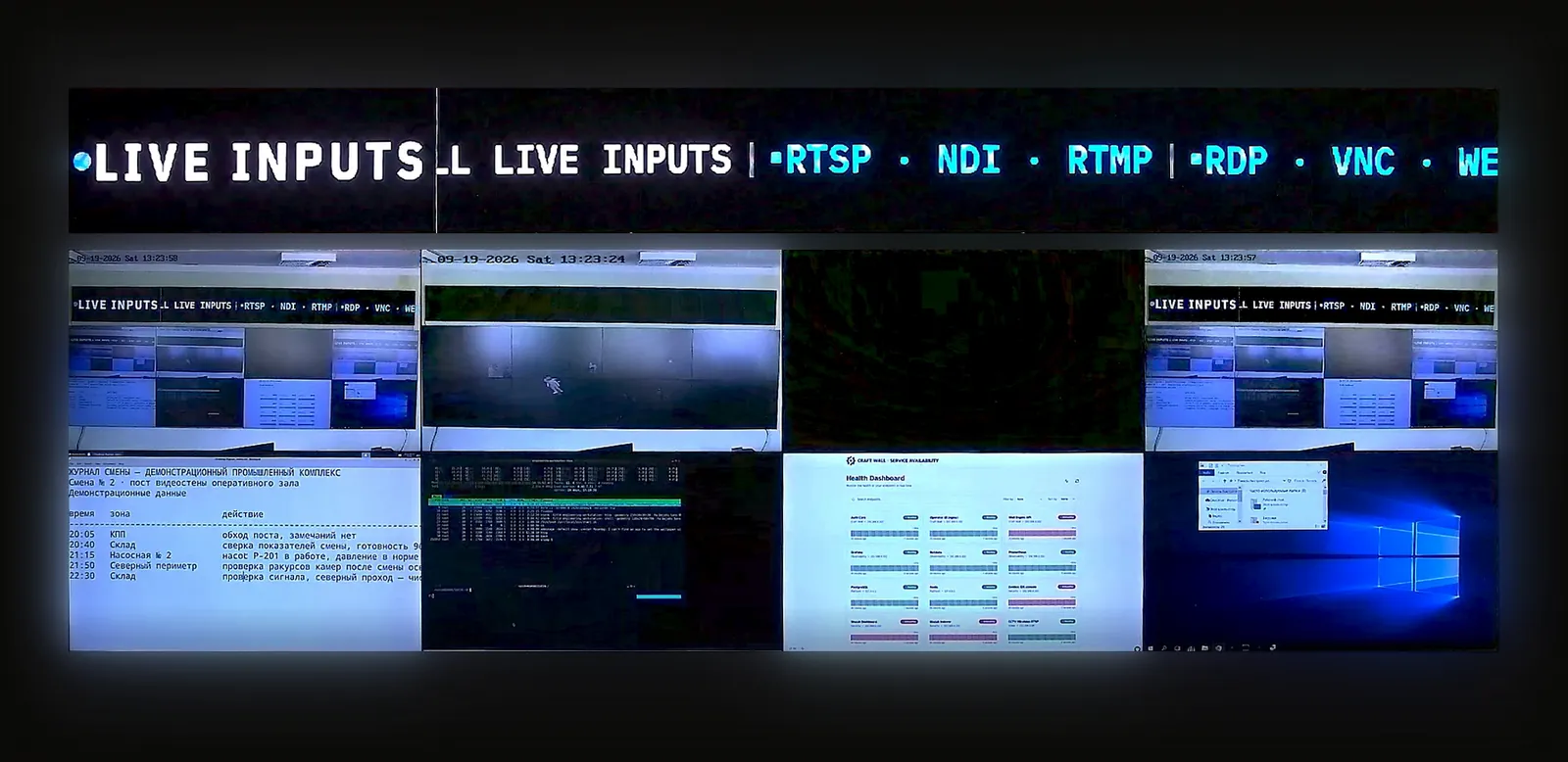
Craft Wall — это программный композер над транспортным слоем, движок, который берёт источники, приходящие по сети, и раскладывает их на видеостене. Сегодня поддерживаются IP-камеры и потоки AV-over-IP по RTSP, RTMP, HLS и SRT, NDI (full и HX), HDMI/SDI-захват, веб-страницы и дашборды, удалённые рабочие столы RDP/VNC, ВКС SIP/H.323, документы и видеофайлы; HDMI-выход приёмника IP-KVM захватывается как любой другой HDMI-источник.
IPMX не входит в число нативных типов источников: поток IPMX попадает на стену через сертифицированный декодер IPMX и HDMI/SDI-захват.
Два момента важны для любого решения о закупке, связанного с IPMX и Craft Wall:
- Поскольку Craft Wall размещается над транспортом, выбор между IPMX, ST 2110 и SDVoE происходит на уровне энкодера/декодера, а не композера. Та же инсталляция Craft Wall показывает IPMX-источник, поданный через декодер, рядом с потоками NDI и RTSP.
- Стандартное Linux-«железо» означает отсутствие чипсетной привязки на уровне контроллера стены. IT-бюджет на композер остаётся на Linux-сервере с NVIDIA GPU, независимо от того, какой AV-over-IP-стандарт говорят энкодеры.
Если тендер уже требует IPMX-конформные энкодеры, правильный путь — закладывать сертифицированное IPMX-оборудование (из реестра AIMS) на стороне источников и заводить выходы декодеров в Craft Wall через HDMI/SDI-захват. Слой композера — более гибкий элемент стека: сменить wall-software дешевле, чем сменить транспорт.
В заключение
AV-over-IP в 2026 году — не «выбираем победителя», а «подбираем спецификацию под помещение». ST 2110 владеет телевещанием. SDVoE владеет sub-frame-задержкой на умеренных масштабах. IPMX — открытый стандарт для всего остального, а тендерный сдвиг 2026 года достаточно реален, чтобы заказчики, игнорирующие его сейчас, рисковали переделкой инсталляции в 2028 году. Самый безопасный default для новой закупки диспетчерской — IPMX плюс NMOS, с чётким «аварийным» переходом на ST 2110, если какая-либо часть объекта пересекается с телевещанием.
Читать дальше: IPMX, NMOS, SMPTE ST 2110, SDVoE в глоссарии или сравнение Craft Wall vs VuWall TRx — как этот транспортный вопрос разрешается на уровне управления видеостеной.